

Note: This poetry is originally published on MEDIUM.
I was under the dark clouds,
where the sun leaked its last shade.
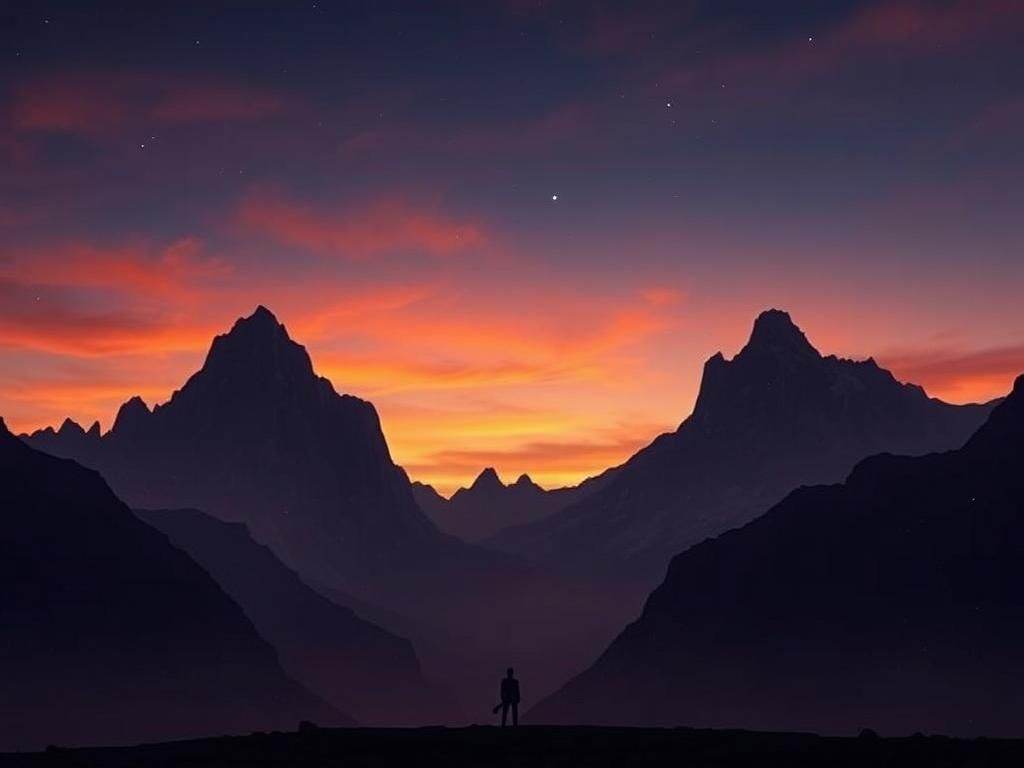
and the mountains ascended like divine beings,
kept their eyes on, as if they felt whatever was in my chest.
The atmosphere was filled with the voice of stillness,
the quietness was so oppressive that it laid hold of my breast.
but also it calmed me, like the touch of a friend of long ago—
It was cumbersome, but I was there.
Pulsations of night went through the tops of the mountains,
melted gold mixed with indigo blue.
My thought was, what a very fleeting moment this was,
how it is actually filled with its own transient nature.
The dark pointed summits were weapons in the sky,
and for a heartbeat, I was envious of them—
So faultless, so robust,
while I broke up under the load of the day.
But the twilight also held me,
It wrapped me up in a nimble light.
It said: The night comes even to the greatest mountains,
and melts them with its light.
While the stars began their slow growth,
At the end of the day, I released.
The mountains were my proxies,
their moved shadows in the spot of mine solid ones.
It was there that I found my tranquility.
And in their quietness, I found my peace.
Summary
The poem “Mountains in Twilight” is a clear example of how the author is very intimately connected with nature at the twilight time. The speaker who turns to look at the mountains below the purple-blue-lit sky is very moved by the overwhelming sight of the fleeing light as the day steps back in front of the night. The mountains, almost standing up like gods, silently, watching, and being timeless are compared to the narrator who feels frail and impermanent, allowing the poet there.
The color of the twilight, with its molten-gold and indigo, is a metaphor for the beautiful moments of life that have both sorrow and delight. The quiet of the place is not dreadful, but is rather a loving mother’s tender arms, protecting the speaker from the quietness that seems almost sacred. In the narrator’s highly personal conversation with nature, he/she ponders his/her own struggles, the machinery that makes the young trees grow right from the ground of envy for the mountains, rock, and the wishing for stability amidst the shifting sands of life.
As the day turns to night and the stars start to appear, the narrator begins to feel more and more at ease. They are comforted by the knowledge that the night’s cloak softens even such big and everlasting objects of the earth. The firm mountains seem to contribute their power, embodied by the narrator’s wish and steadiness when they are disadvantaged.
This poem, in the long run, becomes a tribute to the healing power of nature. It is about how the sturdy mountains and the ephemeral twilight can unite to soothe an anguished heart. The poem is delicate meditation on mankind’s vulnerability and toughness, thus the phrase even during our worn times we can see the beauty of our surroundings.


Leave a Reply