

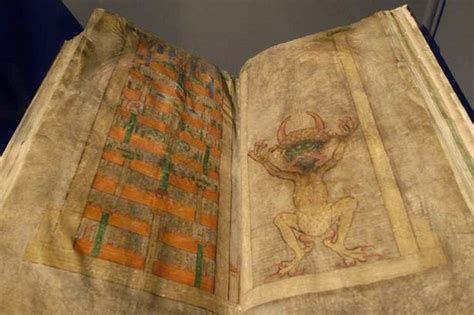
It is one of the world’s most mysterious manuscripts-the famous, or infamous, Codex Gigas, commonly called the “Devil’s Bible.” This monolithic book, weighing in at nearly 165 pounds, stretches out over 620 pages of vellum, or animal skin, and was created in what is now the Czech Republic in the early 13th century. Its contents have spawned a million stories and speculations regarding how it was created, primarily because of the famous illustration of the devil across the entire page.
Not only is the Devil’s Bible impressive in size, but it is also impressive about what it contains. The religious texts, Old and New Testaments, combine with scientific knowledge of the time, including works on medicine and astrology. Among the things included in this book are a list of sins and the remedies for them, some historical records, and even a calendar. The mix of sacred and secular writings creates an air of mystery regarding the purpose of the book.

According to a legend, the Codex Gigas was written by a monk who, in a prison cell awaiting punishment, agreed with the devil on the condition that he was to complete the book by nightfall. Such an explanation was born from a rather strange combination of manuscripts and the image of a devil in the text combined with the sheer scale of the work.
Scholars believe the book may be the product of a whole lifetime of a single scribe because the hand is never different throughout the book. Modern historians and researchers will continue to explore the Codex Gigas for knowledge about medieval monastic life, the time culture in which it lived, and the knowledge the pages now hold. Now, this book remains inside the National Library of Sweden in the city of Stockholm, taking the attention of the viewer with its fabled glow and remarkable story.
FOR MORE DETAILS READ MY ARTICLE ON “MEDIUM” PLATFORM


Leave a Reply